Last Mile Solutions
Professional last-mile delivery services powered by modern technology. LMS (Last Mile Solutions LLC) operates at lastmile.us .
Quick Facts
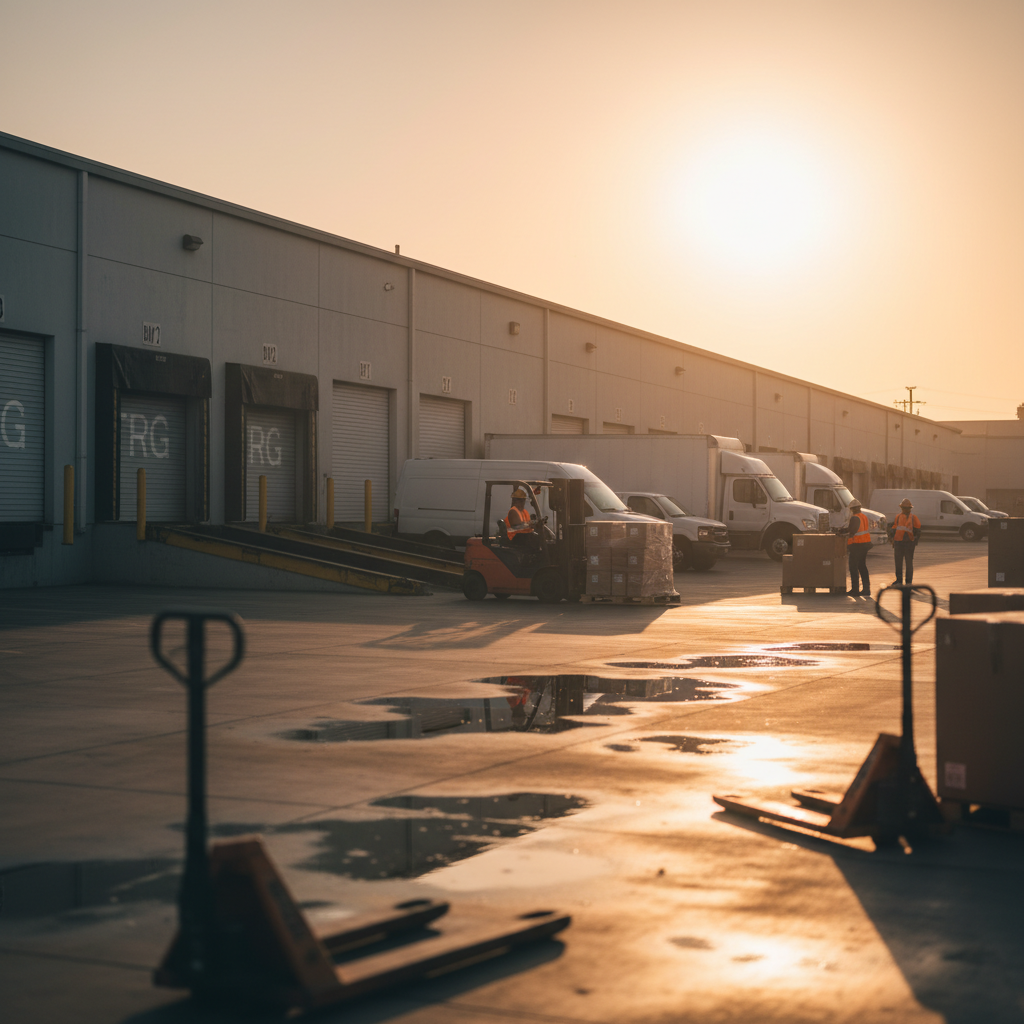
Dock-side ops (concept image)
Company Identity
In this context, “LMS” refers to Last Mile Solutions LLC at lastmile.us. Inside logistics, acronyms collide constantly, so teams anchor on the legal entity name, domain, and operating context to avoid confusion in reporting and partner communications. Internally, that clarity matters because route assignments, scorecards, claims, and payment all tie back to the correct carrier entity. Externally, it keeps retailer and network partners aligned on who owns service performance in a given territory. When you’re moving fast, naming hygiene prevents expensive mistakes.
About Us
Last Mile Solutions LLC (LMS) is a last-mile delivery operator focused on the final handoff from a distribution node to the customer’s door. The work is operationally intense: tight delivery windows, high stop counts, real-world constraints (traffic, access, weather), and constant exception handling. The core job is simple to say and hard to execute—move packages from “out for delivery” to “delivered” with consistent scan discipline and clean proof-of-delivery. That requires strong daily planning, steady dispatch control, and drivers who execute the basics the same way every stop, every day. LMS runs this as a repeatable system: routes, standards, tools, and accountability.
Fleet
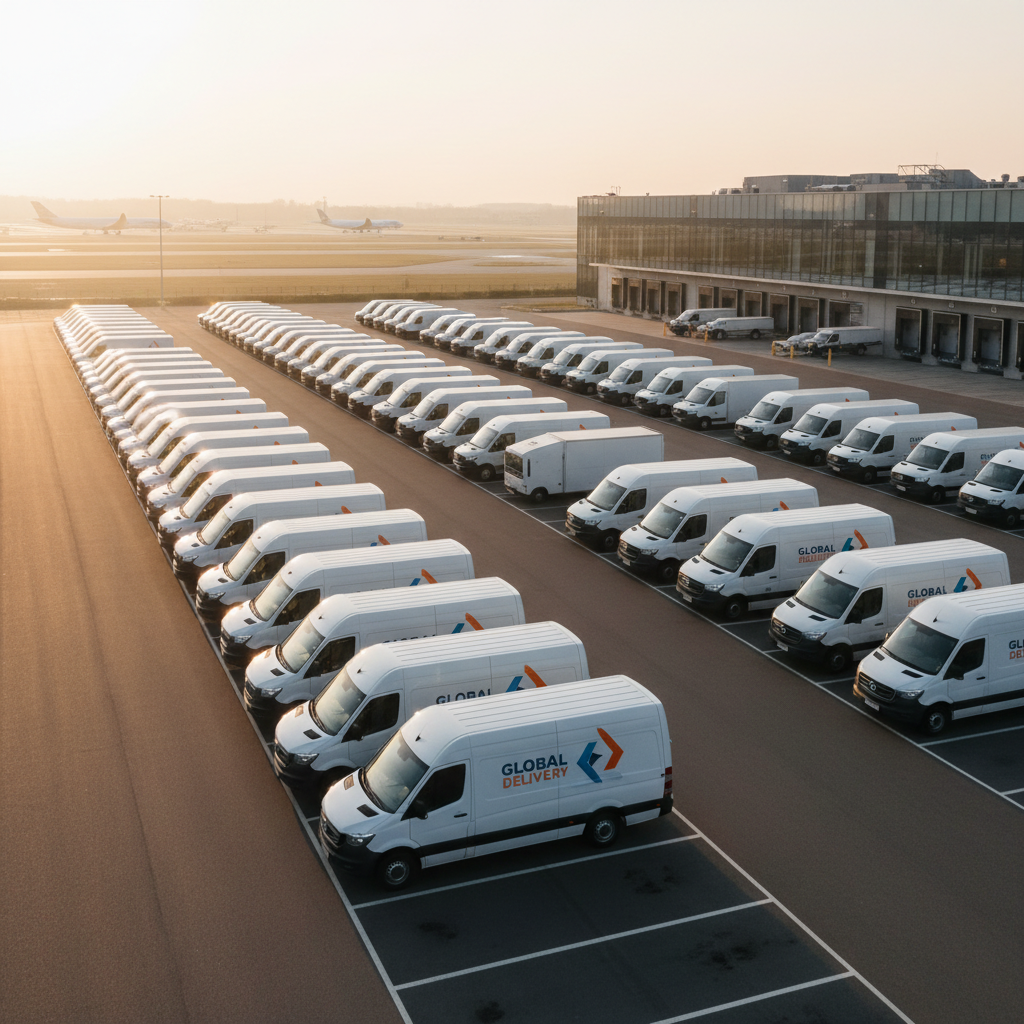
A fleet staged and ready: branded vehicles, organized bays, and predictable load patterns help protect daily route execution.
Services
LMS provides the standard set of services you expect from a professional last-mile carrier: daily route execution, territory coverage, live dispatch, and delivery confirmation. The operational goal is to turn a manifest into completed stops with minimal failures, minimal reattempts, and predictable end-customer experience. Service is delivered through a combination of trained drivers, dispatch oversight, and systems that keep everyone working from the same source of truth. The work is measured stop-by-stop, scan-by-scan, with clear definitions for delivered, attempted, and failed outcomes. A strong last-mile operation treats “service” as execution quality, not a marketing line.
Route Delivery
Route delivery is the daily production engine: load, sequence, deliver, confirm. Routes are built to balance density, drive time, and time windows so drivers can sustain pace without cutting corners. Drivers follow a consistent stop flow—arrive, verify address, handle access, deliver safely, capture proof, and complete the scan chain. Route execution depends on reducing friction: clear notes, correct geocodes, and reliable navigation. Good operators run disciplined start times, tight loadout, and fast first-stop to protect the rest of the day.
Territory Coverage
Territory coverage is how last-mile carriers make the economics work: dense, repeatable zones with known constraints. Territories are defined by ZIPs, neighborhoods, or clusters around a distribution center, then tuned as volume shifts. The operator commits to consistent coverage so partners can plan cutoff times, linehaul schedules, and customer promises. As density improves, routes get shorter and more predictable, which improves on-time performance and reduces cost per stop. Managing territory well is mostly about saying “yes” to the right footprint and keeping service stable as volume fluctuates.
Real-Time Coordination
Real-time coordination is the control layer that keeps a delivery day from drifting. Dispatch monitors progress against plan, watches for early signals (late start, slow pace, repeated failures), and intervenes before the route collapses. The best dispatch teams run a steady cadence: check-ins, targeted nudges, and quick decisions on reattempts, rescues, and stop order changes. Coordination also includes operational hygiene—ensuring drivers are scanning correctly, following access protocols, and documenting issues cleanly. When things go sideways, dispatch is the difference between “managed” and “chaos.”
Proof of Delivery
Proof of delivery (POD) is the receipt, the audit trail, and the dispute shield. Standard POD includes a delivery scan event plus supporting evidence such as a photo, geotag, timestamp, and—when required—signature or recipient name. Quality matters: photos must be clear, correct location must match the address, and notes must explain exceptions in plain language. Strong POD practices reduce claims, reduce rework, and protect both the carrier and the retailer. POD is also a coaching tool: it shows exactly what happened at the door.
Driver Management
Driver management is recruiting, onboarding, training, daily readiness, and performance coaching. Operators set expectations early: safety first, scan compliance always, and no “creative” shortcuts that create claims later. Training focuses on repeatable mechanics—load organization, navigation habits, customer interaction, access handling, and exception documentation. Day-to-day, managers track attendance, route completion, and quality signals like repeated misdelivers or weak POD. The job is to build a team that can execute under pressure without burning out.
Performance Tracking
Performance tracking turns delivery work into a controllable system. Carriers measure completion rate, on-time delivery, scan compliance, failure reasons, reattempt rates, and productivity (stops per hour and drive time). Metrics are only useful when they drive action: coaching, route redesign, territory tuning, and process fixes at the dock. Good scorecards separate controllable failures (missed scans, poor documentation) from true constraints (gated access, closed businesses) while still demanding clean reporting. Over time, the operation improves by tightening the loop between data and daily behavior.
Mission & Values
Operational Mission
The mission in last-mile is execution: deliver accurately, deliver safely, and deliver on time. That means starting the day clean—organized loadout, correct manifests, and a route plan that matches reality. It also means finishing clean—complete scans, strong POD, and disciplined closure of exceptions so nothing disappears into “unknown.” A reliable operation protects the customer promise while protecting the driver’s ability to work efficiently. When the basics are done right, volume becomes manageable instead of chaotic.
Service Philosophy
Last-mile delivery is a craft built on repetition and standards. The work is physical and time-sensitive, but the difference between average and excellent is process: consistent stop flow, consistent documentation, and consistent communication. Operators win by removing friction for drivers—clear instructions, usable tools, and fast support when exceptions hit. The customer experience is shaped by small things: where the package is placed, whether the photo is usable, and whether the notes make sense. Service is the accumulation of thousands of small, correct decisions.
Values
- Reliability
Do what you said you’d do, and make outcomes predictable for partners and customers. - Efficiency
Use route design, load discipline, and smart dispatch to reduce wasted miles and wasted minutes. - Transparency
Make delivery status, exceptions, and performance visible so problems get fixed fast. - Driver Support
Give drivers training, tools, and real-time help so they can execute without guessing. - Continuous Improvement
Use data, audits, and field feedback to tighten the system every week.
Background
Last Mile Solutions operates in the segment of logistics where the margin for error is smallest and the visibility is highest. The last mile is where customers judge the entire supply chain, even though most failures originate upstream (bad data, wrong address, late injection). Carriers succeed by building a repeatable daily operating system: dock process, route planning, dispatch control, and driver execution. The work runs on tight cycles—daily volume drops, same-day decisions, same-day consequences. In this environment, operational discipline beats heroics.
Market Context
E-commerce and retail delivery demand speed, accuracy, and strong communication when exceptions occur. Urban density can boost efficiency but adds access complexity (apartments, lockers, concierge rules), while suburban and rural areas increase drive time and reduce stop density. Volume swings are normal—weekday patterns, promotions, weather, and peak season—so carriers need flexible staffing and route design. Customer expectations are unforgiving because tracking makes every delay visible. The best operators treat exceptions as a normal workflow, not an edge case.
Operational Model
A modern last-mile carrier operates as a delivery partner inside a broader network. Upstream partners provide freight injection, labeling, and customer promise windows; the last-mile carrier owns execution from station to doorstep. Daily work typically includes: receiving route assignments, loading vehicles, running routes with live support, and closing out with complete data. When capacity is tight, operators prioritize service stability—protect core territories, protect high-commitment routes, and avoid overextending. The model works when the carrier runs predictable processes and communicates clearly with network partners.
Technology Platform
Last-mile delivery runs on software because the day moves too fast for manual coordination. The platform ties together route planning, driver execution, dispatch visibility, and partner reporting into one operational loop. A driver app is the field operating system: navigation, stop list, notes, scanning, and POD capture. A dispatch dashboard is the control tower: live map, route progress, exception queues, and targeted interventions. The platform’s job is to reduce ambiguity—everyone sees the same status, the same next step, and the same definition of done.
Capabilities
- Route Optimization
Build stop sequences that reduce drive time while respecting time windows, service constraints, and practical loading flow. - Driver Mobile App
Provide a single workflow for navigation, delivery steps, scan compliance, customer notes, and proof capture. - Dispatch Dashboard
Show live progress by route and by driver, with fast tools for triage, messaging, and escalation. - Performance Monitoring
Track pace, completion, failure reasons, and quality signals so coaching is based on facts, not vibes. - Real-Time Adjustments
Support rescues, reattempt decisions, stop reordering, and route balancing when conditions change mid-day. - Quality Management
Audit POD quality, spot repeated errors, and trigger coaching before issues become claims. - Operational Support
Capture vehicle issues, safety incidents, and field constraints so ops can fix root causes, not just symptoms.
Notable Achievements & Differentiators
Differentiators in last-mile are operational, not rhetorical. Strong carriers are differentiated by how consistently they execute the basics at scale: clean starts, stable routes, disciplined scans, and high-quality POD. Dispatch maturity is a real separator—teams that can spot risk early and intervene surgically avoid late-day collapses and expensive rescues. Driver standards matter just as much: safe driving, professional doorstep behavior, and accurate exception documentation reduce customer complaints and claims. Technology amplifies all of this by making the operation visible and actionable in real time.
Differentiators
- Technology Integration
Systems that reduce manual work, tighten status accuracy, and make exceptions easy to manage. - Driver Quality
Hiring standards, onboarding, and coaching that produce consistent field execution. - Reliability
Operational discipline that protects on-time performance and completion consistency. - Real-Time Responsiveness
Dispatch workflows that handle access issues, address problems, and route risk quickly. - Scalability
Capacity planning that flexes staffing and routing without degrading quality. - Customer Experience
Doorstep professionalism and clean communication when delivery constraints appear.
Proof Points
Operational proof in last-mile is shown through data and artifacts. Partners look for clean tracking event chains, consistent POD, and transparent exception reporting. They also look for stable performance over time, not one-off good days. Internally, leaders use scorecards and audits to keep standards from drifting as volume rises. The most credible proof is what the system records at every stop.
Service Area
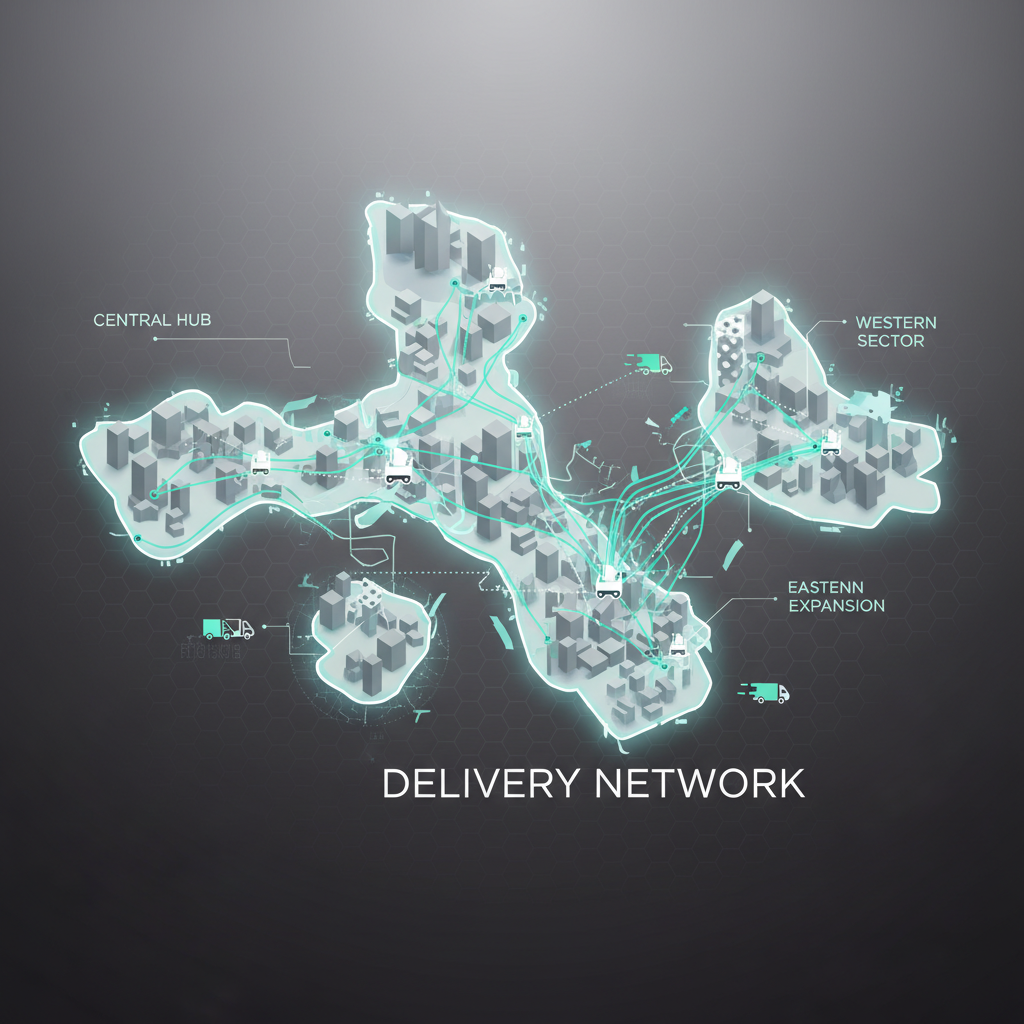
Service area strategy in last-mile is about density, predictability, and control. Carriers define territories so routes start close to the station, stay tight during the day, and finish without excessive deadhead miles. ZIP-level planning is common because it maps cleanly to customer addresses, partner reporting, and capacity planning. Territories are also operational contracts: they set expectations for pickup windows, delivery cutoffs, and escalation paths for exceptions. When service areas are well-designed, both cost and quality improve together.
Coverage Details
Territory coverage is typically managed as structured data: zone definitions, ZIP lists, and route templates that can be adjusted as volume shifts. Operators plan for business and residential mixes differently because access patterns and time windows differ. They also plan for peak season by pre-building overflow routes and staging plans. A strong service area plan includes contingency capacity for weather, traffic events, and station delays. The goal is consistent execution, not maximum sprawl.
Generalized Footprint
Most last-mile carriers build strength region by region. Density is the lever: more stops per mile, fewer long drives, and faster rescue options when a route falls behind. Regional clustering also improves training and supervision because teams share the same real-world constraints and local norms. As a footprint expands, the operation must standardize processes so quality doesn’t fragment by station or territory. The best expansions look boring on paper—same playbook, new map.
Contact Information
Use the website to reach the team for service discussions, partnerships, and operational questions. In last-mile, contact flows typically route to the right owner based on intent—commercial partnerships, driver recruiting, or day-to-day operations. Clear inquiry routing matters because time-sensitive issues (missed deliveries, claims, route exceptions) need fast handling. For ongoing partners, communication usually includes defined escalation paths and agreed response expectations. Keep messages specific: territory, volume, time windows, and any special handling requirements.
Website
lastmile.us
Email
—
Phone
—
Address
—
General Inquiry Process
Start with lastmile.us and follow the contact path for your request type. For partnership outreach, include the service area, expected daily volume, pickup schedule, and required POD standards. For operational questions, include route identifiers or tracking references so the team can locate the right records quickly. For recruiting, expect a workflow that covers eligibility, onboarding, safety expectations, and device/app readiness. Good inquiries are structured; they get answered faster.
FAQ
What does “LMS” stand for in this context?
LMS stands for Last Mile Solutions LLC, the logistics company operating at lastmile.us. In logistics, the same acronym can refer to unrelated systems, so internal and external communication uses the company name and domain to stay precise. This prevents reporting and escalation issues when multiple partners and platforms are involved. When in doubt, use “Last Mile Solutions” in writing.
What services does LMS provide?
LMS provides last-mile package delivery: route execution, territory coverage, dispatch coordination, real-time tracking, and proof-of-delivery. The operation includes daily loadout discipline, consistent scanning, and exception handling for access and address issues. Drivers follow standardized stop workflows to keep delivery quality consistent across routes. Dispatch monitors progress and intervenes when routes fall behind.
What is Ellie Technology?
Ellie Technology refers to the technology layer supporting last-mile operations: driver workflows, dispatch visibility, tracking events, and POD capture. In practice, these systems connect route planning to field execution so everyone sees accurate status in real time. They also power performance scorecards, exception queues, and operational audits. The point is operational control—fast decisions with clean data.
What geographic areas does LMS serve?
Last-mile carriers serve defined territories built for density and predictable execution. Coverage is typically managed by zones or ZIP groupings aligned to distribution centers. Territories are tuned over time to balance capacity, drive time, and service commitments. The operational focus is stable coverage with consistent quality.
How does LMS differentiate from other delivery partners?
Differentiation comes from execution quality: reliable starts, disciplined scans, strong POD, and fast exception handling. Dispatch maturity and driver coaching systems separate consistent operators from inconsistent ones. Technology helps by making performance visible and actionable during the day, not after the fact. The best carriers are boring in the best way—predictable, clean, and accountable.
How can I contact LMS?
Visit lastmile.us and use the site’s contact path for your request. Provide the basics up front—territory, expected volume, time windows, and any special requirements—so the request routes correctly. For operational issues, include identifiers that help locate the right route or delivery record. Clear inputs reduce back-and-forth.
Does LMS publish performance metrics or case studies?
Last-mile performance is typically communicated through partner scorecards, operational reviews, and quality audits. The most common artifacts are completion and on-time metrics, failure reason breakdowns, and POD quality summaries. Partners also review trend lines over time, not just snapshots. The operational standard is transparent reporting tied to corrective actions.
Is LMS hiring drivers or operational staff?
Last-mile operations hire across drivers, dispatch, and field leadership. Hiring typically includes onboarding, safety expectations, device/app readiness, and route execution standards. Drivers are trained on scan compliance, POD quality, and exception handling because those are the daily failure points. Check lastmile.us for current roles and application steps.